
Modern buildings in cities like Dubai are increasingly defined by glass. From sleek office towers to premium retail spaces and residential developments, glass is no longer just a window material, it is a structural and architectural element. This is where architectural glazing comes into play.
For property owners, understanding architectural glazing is essential when planning new construction, renovations, or façade upgrades. This guide explains what architectural glazing means, its scope, common systems such as curtain walls, and the benefits it offers particularly for commercial buildings.
1. What Is Architectural Glazing? (Meaning & Scope)
Definition
Architectural glazing refers to the design, engineering, supply, and installation of glass systems that form part of a building’s structure, façade, or interior architecture.
Unlike basic window installation, architectural glazing involves:
- Structural performance
- Safety and compliance
- Thermal and acoustic efficiency
- Aesthetic integration with the building design
According to the Facade Tectonics Institute (2025), architectural glazing systems are now considered a core building envelope component, not a finishing material.
Scope of Architectural Glazing
Architectural glazing typically includes:
- Curtain wall systems
- Structural and semi-structural façades
- Glass partitions and interior glazing
- Skylights and canopies
- Balustrades and atriums
In cities like Dubai, where glass façades dominate the skyline, architectural glazing plays a critical role in safety, energy performance, and visual identity.
2. Architectural Glazing in the Dubai Context
Dubai’s climate and building regulations demand high-performance glazing solutions. Extreme heat, strong sunlight, wind loads on high-rise towers, and strict safety requirements all influence how glass is specified and installed.
A 2025 report by MEED Projects shows that over 68% of new commercial developments in Dubai incorporate advanced glazing systems, particularly curtain walls and façade glazing.
This makes working with an experienced glass company in Dubai essential one that understands both local climate conditions and regulatory expectations.
3. Curtain Walls Explained
What Is a Curtain Wall?
A curtain wall is a non-load-bearing external façade system, usually made of glass and aluminum, that encloses a building while transferring wind and environmental loads back to the structure.
Curtain walls are common in:
- Office towers
- Hotels
- Commercial complexes
- Mixed-use developments
They are especially prominent in Curtain Wall Dubai projects due to the city’s architectural scale.
Types of Curtain Walls
-
Unitized Curtain Walls
- Pre-fabricated panels
- Faster installation
- Ideal for high-rise buildings
-
Stick-Built Curtain Walls
- Assembled on site
- Greater design flexibility
- Common in mid-rise buildings
According to CTBUH (Council on Tall Buildings and Urban Habitat, 2025), unitized curtain walls reduce installation time by up to 30% on high-rise projects in hot climates.
Why Curtain Walls Are Popular in Dubai
- Excellent daylight penetration
- Modern, premium appearance
- Compatibility with solar-control glass
- Wind-load resistance when properly engineered
This explains the continued growth of Curtain Wall in Dubai across commercial developments.
Read also: Frameless vs Framed Glass Partitions: Which One Should You Choose
4. Architectural Glass Façades
What Is a Glass Façade?
A glass façade refers to the external glass skin of a building, which may include curtain walls, spider glazing, or structural glazing systems.
Façades are designed to balance:
- Aesthetics
- Thermal performance
- Safety
- Durability
A 2025 study by the International Energy Agency (IEA) found that high-performance glazed façades can reduce cooling energy demand by 18–25% in hot regions when combined with proper coatings.
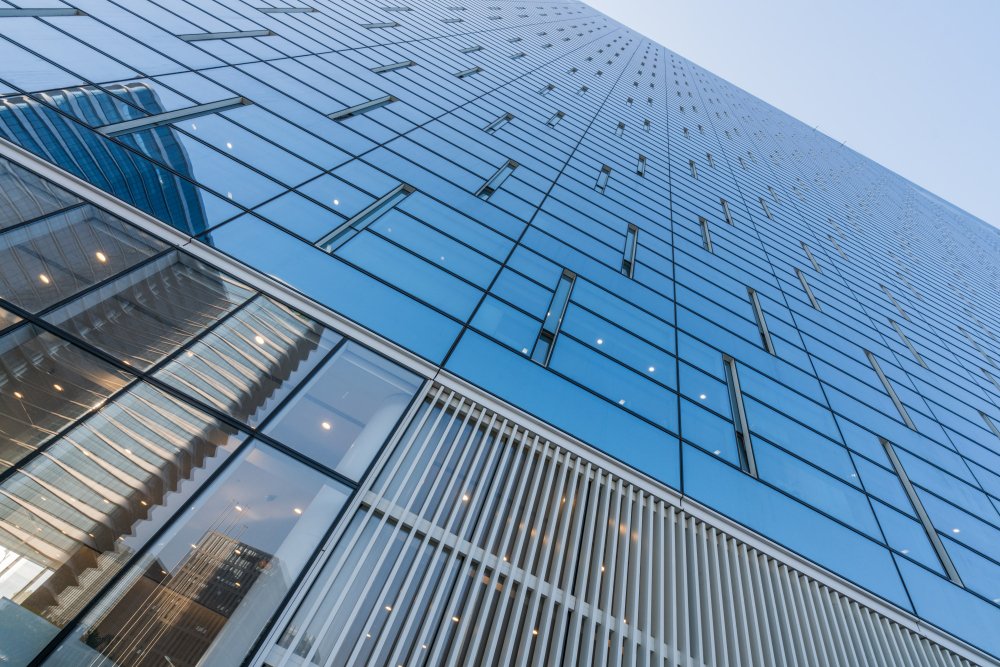
Façade Glazing Systems Common in Dubai
- Structural glazing (silicone-bonded glass)
- Double-glazed units (DGU)
- Low-E coated glass
- Laminated safety glass
These systems require careful engineering and testing reinforcing the importance of choosing the right glass company in Dubai.
5. Glass Partitions & Interior Architectural Glazing
Architectural glazing is not limited to exteriors. Interior glass systems are increasingly popular in:
- Corporate offices
- Retail spaces
- Hospitality projects
Benefits of Interior Glass Glazing
- Maximizes natural light
- Creates open, modern spaces
- Improves acoustic control when laminated glass is used
- Enhances visual transparency without sacrificing separation
According to a 2025 workplace design report by Gensler, offices using glass partitions reported a 12% improvement in perceived workspace quality.
6. Benefits of Architectural Glazing for Commercial Buildings
1. Energy Efficiency
Modern glazing systems use:
- Solar-control coatings
- Double or triple glazing
- Thermal breaks in frames
This significantly reduces heat gain a major advantage in Dubai’s climate.
2. Enhanced Building Value
Buildings with professionally designed glazing systems:
- Command higher rental value
- Attract premium tenants
- Have stronger architectural identity
A JLL Middle East (2025) report indicates that Grade-A commercial buildings with advanced façades achieve 8–12% higher leasing premiums.
3. Safety & Compliance
Architectural glazing uses:
- Toughened glass
- Laminated safety glass
- Engineered fixing systems
This ensures compliance with safety expectations set by Dubai authorities and international best practices.
4. Daylighting & Occupant Comfort
Natural light improves:
- Productivity
- Retail visibility
- Customer experience
The World Green Building Council (2025) confirms that daylight-optimized commercial buildings improve occupant well-being and reduce artificial lighting demand.
7. Choosing the Right Glass Company in Dubai
Architectural glazing is highly specialized. Property owners should look for a glass company in Dubai that offers:
✔ Design & engineering support
✔ Compliance with local building regulations
✔ Experience with curtain wall systems
✔ Quality fabrication and installation
✔ After-installation service
According to RICS Middle East (2025), projects involving specialized glazing contractors experience 25% fewer post-handover defects.
Read also: Premium Glass & Aluminium Solutions for Commercial and Residential Projects in Dubai, UAE
8. Key Considerations for Property Owners
Before committing to an architectural glazing solution, consider:
- Building height and wind loads
- Orientation and sun exposure
- Energy efficiency goals
- Maintenance access
- Budget vs long-term performance
Early involvement of glazing experts reduces redesign costs and delays.
Conclusion
Architectural glazing is far more than decorative glass. It is a critical building system that influences safety, energy efficiency, aesthetics, and long-term value.
For property owners in Dubai, understanding concepts such as curtain walls, glass façades, and interior glazing is essential when making informed investment decisions. With the city’s climate and architectural ambition, professionally designed glazing systems are no longer optional, they are expected.